

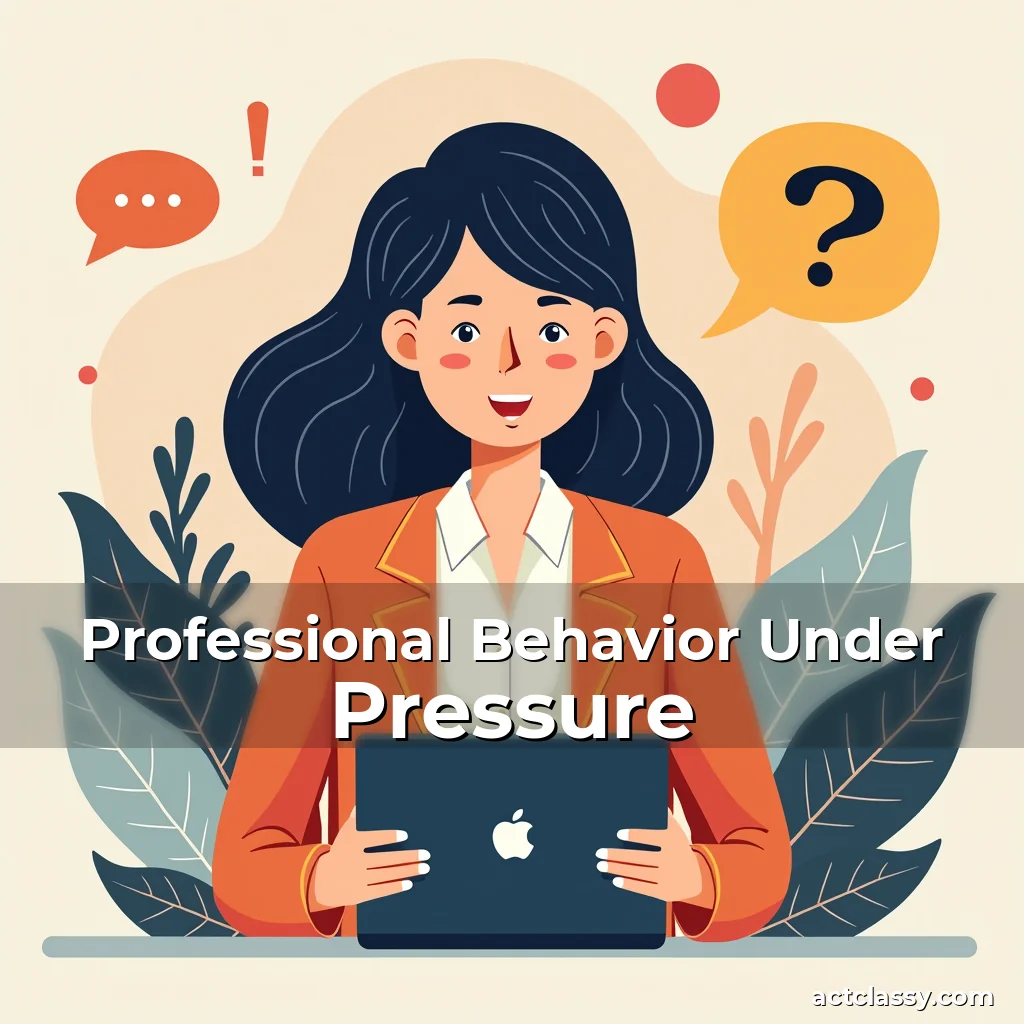
The Art of Professionalism in High-Stakes Environments
In today’s fast-paced professional world, maintaining composure under pressure is not merely an asset—it’s a necessity. Whether you’re navigating corporate boardrooms or leading high-stress projects, the ability to exhibit professional behavior consistently defines career trajectories.
From managing difficult clients to handling unexpected crises, professionals must cultivate skills that allow them to remain calm, composed, and effective even when circumstances become overwhelming. This article explores how individuals can develop and maintain professionalism amidst challenges that test their limits daily.
Mindset Shifts That Define True Professionals
A true professional understands that challenges are inevitable rather than avoidable. This mindset shift transforms obstacles from potential roadblocks into opportunities for growth. By embracing difficulties as part of the journey, professionals build resilience without losing sight of core values.
This perspective allows individuals to approach problems creatively while upholding ethical standards. When faced with adversity, maintaining integrity becomes less about resisting change and more about adapting intelligently within established boundaries.
- Proactive Attitude: Seeking solutions before issues escalate demonstrates initiative and responsibility.
- Ethical Consistency: Aligning actions with personal values creates trust through reliability over time.
- Adaptive Thinking: Flexibility enables innovative problem-solving during unforeseen events.
Cultivating these mindsets requires conscious effort but yields long-term benefits. Individuals who adopt such approaches often find themselves better equipped to handle complex situations without compromising quality or relationships.
The transition from reactive to proactive behaviors marks a significant milestone in professional development. It signifies readiness to take ownership of outcomes regardless of external factors influencing success or failure.
Communication Strategies For Maintaining Dignity Under Fire
Effective communication remains crucial during stressful moments. How we convey information, especially in tense environments, significantly impacts both immediate results and long-term reputations. Clear articulation prevents misunderstandings while projecting confidence through speech patterns.
Voice modulation techniques play a vital role here—modulating tone to sound authoritative yet approachable helps deescalate conflicts. Pausing thoughtfully before responding also conveys control rather than desperation.
Non-verbal cues complement verbal messages powerfully. Maintaining steady eye contact shows engagement and sincerity. Open body language reinforces openness to dialogue, making others feel heard and respected despite challenging circumstances.
Written communication demands equal attention during crises. Emails sent in haste may contain errors or appear dismissive. Taking time to compose clear, respectful messages maintains professionalism across all platforms.
Regular practice enhances these skills naturally. Role-playing scenarios with colleagues provides safe spaces to refine responses to various workplace pressures effectively.
Emotional Intelligence As A Core Competency
Emotional intelligence (EI) has emerged as essential for modern professionals facing increasingly complex interpersonal dynamics. Understanding emotions—both our own and those around us—allows for more thoughtful interactions that foster collaboration instead of conflict.
Self-awareness forms the foundation of EI. Recognizing emotional triggers helps prevent impulsive reactions that might damage relationships or compromise decision-making abilities during critical junctures.
Empathy plays equally important roles by enabling professionals to navigate diverse perspectives sensitively. Acknowledging others’ feelings builds rapport and facilitates smoother resolution processes when disagreements arise.
Skillful regulation of emotions ensures appropriate expressions at suitable times. This balance between authenticity and restraint distinguishes mature professionals from those still developing emotional maturity.
Developing EI involves continuous learning experiences—reading relevant literature, participating in workshops, seeking feedback regularly—all contributing to gradual improvement over time.
Time Management Techniques To Preserve Composure
Mastering time management prevents burnout and preserves mental clarity necessary for sustained performance. Prioritization frameworks help identify urgent versus important tasks accurately, ensuring optimal allocation of energy resources.
Tools like Eisenhower Matrix differentiate tasks based on urgency/importance criteria. Applying this method systematically reduces overwhelm by focusing efforts where they matter most.
Budgeting time wisely includes scheduled breaks to refresh cognitive capacities. Short intervals dedicated solely to rest rejuvenate focus levels required for demanding workloads efficiently.
Delegation strategies relieve excessive burdens appropriately. Trustworthy team members assigned meaningful responsibilities create space for strategic oversight without micromanaging tendencies.
Consistent review cycles ensure adherence to planned schedules. Adjustments made proactively maintain alignment between objectives and available capacity without sacrificing quality standards.
Building Resilience Through Positive Mindset Cultivation
Fostering a positive outlook strengthens psychological endurance against setbacks. Optimistic interpretations transform negative incidents into learning experiences rather than definitive failures.
Growth mindset principles encourage viewing challenges as temporary hurdles worthy of creative solutions. Believing in one’s capacity to adapt nurtures perseverance when initial attempts fail unexpectedly.
Gratitude practices reinforce appreciation for existing achievements. Regular reflection upon accomplishments builds self-esteem independently of external validation sources.
Visualizing successful outcomes prepares minds subconsciously for achieving goals. Mental rehearsals strengthen confidence levels prior to actual execution phases successfully.
Cultivating optimism doesn’t mean ignoring reality; rather, it involves choosing constructive narratives over defeatist assumptions whenever possible circumstances permit.
Navigating Workplace Conflicts With Grace And Strategy
Conflicts inevitably arise in collaborative settings requiring careful navigation. Addressing disputes promptly prevents escalation while preserving mutual respect among involved parties.
Active listening proves instrumental in resolving differences constructively. Giving full attention validates concerns expressed by others, creating foundations for equitable resolutions later.
Choosing appropriate timing matters greatly too. Initiating conversations when everyone involved is receptive increases chances of productive discussions occurring smoothly without added tensions.
Focus should always remain on issues rather than personalities during negotiations. Objectivity keeps dialogues centered on finding common ground instead of assigning blame unfairly.
Documenting agreements reached ensures accountability moving forward. Written records serve as references confirming understanding achieved through discussions conducted transparently.
Cultivating Professional Networks For Long-Term Success
Strong professional networks provide invaluable support systems throughout careers spanning decades. Meaningful connections forged early establish pathways toward future opportunities organically emerging from trusted relationships built over years.
Participating actively within industry communities expands visibility beyond current employer confines. Engaging genuinely with peers fosters reciprocal relationships beneficial mutually when considering new ventures eventually arising.
Demonstrating consistent reliability cements reputation as dependable collaborators worth investing time/energy into mentoring younger professionals entering fields similarly passionate about excellence.
Sharing knowledge freely encourages ongoing learning exchanges enriching all participants involved continuously. Mutual growth accelerates individual progress exponentially compared to solitary pursuits alone.
Regular follow-ups sustain momentum created initially establishing enduring bonds capable of weathering changes impacting industries dramatically affecting livelihoods directly tied to them personally.
Continuous Learning As An Essential Component Of Professional Excellence
Remaining stagnant risks obsolescence rapidly evolving landscapes demand constant adaptation. Continuous education equips individuals with updated competencies necessary for thriving amid transformations reshaping professions globally.
Pursuing certifications relevant to current roles enhances credibility significantly. Formal recognition through accredited programs boosts marketability substantially increasing chances securing preferred positions sooner rather than later.
Attending conferences exposes attendees to cutting-edge innovations shaping future trends likely influencing entire sectors profoundly soon thereafter. Networking simultaneously occurs facilitating cross-pollination ideas sparking breakthrough initiatives subsequently implemented widely.
Reading specialized publications keeps abreast developments occurring constantly within chosen domains. Staying informed enables timely decisions regarding investments in technologies/processes poised becoming standard operating procedures soon.
Lifelong learning commitment signals dedication to craft distinguishing exceptional candidates easily identifiable above competitors vying same limited openings routinely advertised publicly.
Conclusion
Professionals who master behavioral expectations excel in dynamic environments characterized by unpredictability. Their consistent application of learned principles ensures stability amidst turbulence encountered frequently within contemporary workplaces.
Cultivating these competencies represents investment yielding dividends measured not only financially but also through enhanced job satisfaction derived from fulfilling engagements aligned closely with personal aspirations professionally.


As someone who has always found himself involved with online media in one form or another in my career, I have developed a passion for educating myself on the latest developments in publishing and social media and try to bring my love of the medium into my numerous projects.
You May Also Like

Gen Z's Lack of Professionalism: The Rise of Etiquette Coaches
As the world slowly returns to the office, a growing number of employers are finding themselves at odds with a...
Social Skills Coaching and Mentoring
Social Skills Coaching and Mentoring In an increasingly interconnected world, mastering social skills is not just beneficial—it's essential. Whether you're...

Body Language Signals of Deception
Body Language Signals of Deception In today’s socially conscious world, understanding subtle nonverbal cues is crucial for navigating relationships, business...

Event Planning for Conferences and Trade Shows
The Art of Event Planning: Crafting Memorable Experiences in Etiquette and Lifestyle Events In an era where experiences often outweigh...
Related Posts

Wedding Event Planning Timeline and Checklist


The Elegant World of Formal Events: A Comprehensive Etiquette Handbook