

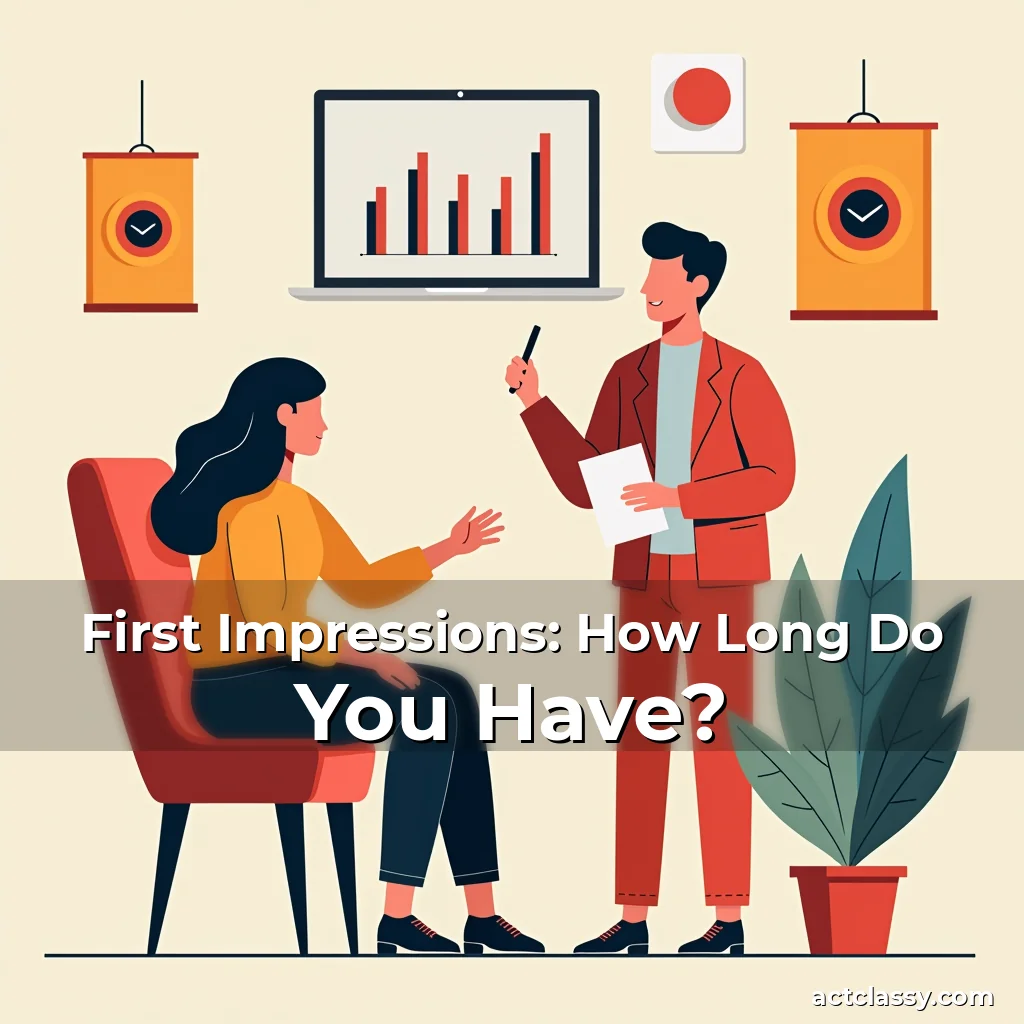
First Impressions: How Long Do You Have?
Your first impression is often your last. In just seconds, you make judgments that define relationships, opportunities, and social standing. Whether entering a boardroom, meeting someone new, or stepping into an exclusive event, understanding the mechanics behind these fleeting yet powerful moments is essential.
The stakes are high, and there’s little room for second chances. Etiquette and lifestyle enthusiasts know that grace, poise, and awareness are not only assets but necessities. Let’s delve into the science, art, and strategy of crafting unforgettable first impressions.
The Neuroscience Behind First Impressions
Your brain processes visual and auditory cues faster than you think, forming conclusions even before conscious thought intervenes. Neurological studies reveal that humans judge strangers in approximately seven seconds—a blink of an eye—but it shapes perceptions permanently.
During this critical window, your brain uses mirror neuron activity to simulate interactions and infer intentions. It also applies what researchers call “the halo effect,” where a single trait influences overall judgment. For instance, a confident smile may amplify perceived competence or charm.
- Mirror Neurons: These activate during observation, allowing your brain to predict others’ behaviors based on subtle cues like posture or eye movement.
- Halo Effect: A polished outfit or elegant accessories might unconsciously elevate expectations about personality traits, impacting outcomes long after the encounter ends.
What Your Brain Sees First
Your appearance plays a pivotal role in shaping immediate reactions. Research indicates that people decide whether to trust or reject someone visually within milliseconds. Eye color, skin tone, and even hairstyles register instantaneously due to deeply ingrained cultural associations.
Beyond aesthetics, spatial dynamics influence interpretation. Standing tall versus slouching signals self-assurance or insecurity. Similarly, proximity matters—if you step too close, your companion may perceive forwardness; if you linger far, they may assume disinterest.
Cultural Nuances in Visual Perceptions
In Western societies, direct eye contact conveys honesty and confidence, whereas some Eastern cultures view prolonged gaze as disrespectful or confrontational. Understanding these differences ensures respect across borders and avoids unintended missteps.
Likewise, clothing choice varies significantly globally. While crisp business attire may impress professionals in North America, understated elegance resonates more in European diplomatic settings. Adapting dress codes mindfully reflects attention to context.
Factors That Shape Perception Within Seconds
Prior knowledge precedes the actual moment. A reputation, online presence, or mutual connections set subconscious expectations long before face-to-face meetings occur. Positive preconceived notions can tilt evaluations positively, regardless of reality.
Voice modulation holds equal weight in conveying identity. Tone, pitch, and cadence expose emotions—and sometimes biases. A calm voice suggests stability; an erratic one raises doubts about reliability. Mastering vocal control allows deliberate shaping of impressions postures.
- Body Language: Open postures like uncrossed arms foster approachability, while closed positions signal defensiveness or disengagement.
- Facial Expressions: Micro-expressions lasting less than half a second reveal authentic feelings—an open mouth indicates surprise; downward eyes suggest discomfort.
Verbal Cues and Nonverbal Signals in Seconds
The way you speak matters just as much as your physical demeanor. Clarity and volume project authority, but so does choosing the right lexicon. Using sophisticated vocabulary shows education level, whereas casual phrasing appears friendly depending on circumstance.
Nonverbal feedback loops also shape exchanges. Nodding acknowledges engagement, whereas lack thereof implies distraction. Leaning slightly toward conversation partners demonstrates active listening—a skill particularly valued among those prioritizing social grace.
Tips for Optimizing Verbal Impacts
Speak slowly enough for listeners to absorb content without sounding hesitant. Pauses enhance emphasis, and measured speech prevents coming off as either nervous or dismissive. Practicing before pivotal conversations builds automatic fluency that radiates comfort rather than performance.
Selectively mirroring others’ speaking patterns subtly fosters rapport, similar to matching hand gestures naturally. However, overdoing imitation risks appearing insincere—it must feel organic to work effectively.
Cultivating Authenticity Through Awareness
Authentic expression remains vital despite meticulous preparation. Pretense erodes credibility, but calculated honesty creates lasting bonds. Knowing oneself well enables presenting genuine strengths while acknowledging growth areas gracefully.
Balance between preparation and spontaneity yields best results. Preparing responses enhances confidence, but allowing natural flow maintains relatability necessary for meaningful connections beyond transactional ones.
- Genuine Smiles: True smiles involve orbicularis oculi muscle activation, visibly crinkling eyes—not just pursed lips—as opposed to fake grins used primarily in photography sessions.
- Personal Stories: Sharing anecdotal evidence reveals character and makes abstract ideas tangible, fostering deeper engagement with listeners.
Overcoming Common Pitfalls
One frequent mistake involves overthinking decisions. Paralysis caused by analyzing every possible outcome delays action unnecessarily. Instead, focusing on core values offers directional guidance during uncertainty.
Another challenge lies in resisting external pressures. Societal norms often dictate acceptable behavior, yet individuality drives innovation. Finding harmony between both sides establishes leadership potential through distinctiveness tempered appropriately.
- Avoid Overanalyzing: Trust trained intuition developed through consistent practice instead of obsessing over perfectionism leading nowhere.
- Reject Peer Pressure: Define personally meaningful standards rather than adopting popular trends merely because they’re prevalent among peers.
Practical Applications Across Scenarios
Knowledge transfers seamlessly from theory to real life via scenario-specific implementation. Interview situations demand precise demonstration skills, whereas networking events prioritize broadening interpersonal circles efficiently.
Professional environments expect adherence to formal protocols. Maintaining eye-level conversations, offering firm handshakes with appropriate pressure levels, and dressing accordingly according to industry customs become instinctual moves once practiced consistently.
Celebrating Small Wins
Each successful interaction reinforces positive habits, building momentum toward greater achievements. Recognizing progress—even incremental improvements—keeps motivation alive throughout continuous development journeys.
Journaling reflections provides objective insight into strengths emerging organically and weaknesses requiring refinement efforts. Tracking weekly successes cultivates optimism crucial for sustained success trajectories aligned with aspirational goals.
Conclusion
Understanding how to manage first impressions empowers individuals to thrive professionally and socially. Every gesture, word, and attitude carries significant implications when constructing enduring reputations worthy of admiration.
Apply these insights deliberately now—whether preparing for interviews, hosting dinners, or simply interacting daily—to ensure consistent excellence wherever you go. Remember: mastery lies not solely in technique but in combining knowledge with heartfelt authenticity responsibly applied across life stages continually evolving together harmoniously alongside growing aspirations ever expanding outwardwards indefinitely.]


As someone who has always found himself involved with online media in one form or another in my career, I have developed a passion for educating myself on the latest developments in publishing and social media and try to bring my love of the medium into my numerous projects.
You May Also Like


Tips for Running a Marathon
Everyone at Act Classy is incredibly health conscious. With the exception of our new copy editor, Grimace. To his credit,...


Modern Etiquette vs Traditional Protocol
Modern Etiquette vs Traditional Protocol In an era defined by rapid technological advancements and shifting societal values, the rules governing...

Cocktail Party Dress Code Decoded
Cocktail Party Dress Code Decoded In an age where social gatherings have become both art and science, understanding cocktail party...

The Elegant Art of Dining Etiquette: Mastering Table Manners for Every Occasion
The Elegant Art of Dining Etiquette: Mastering Table Manners for Every Occasion Dining etiquette is an essential skill that reflects...
Related Posts

Professional Behavior During Company Events
Business Lunch Dining Etiquette Tips