


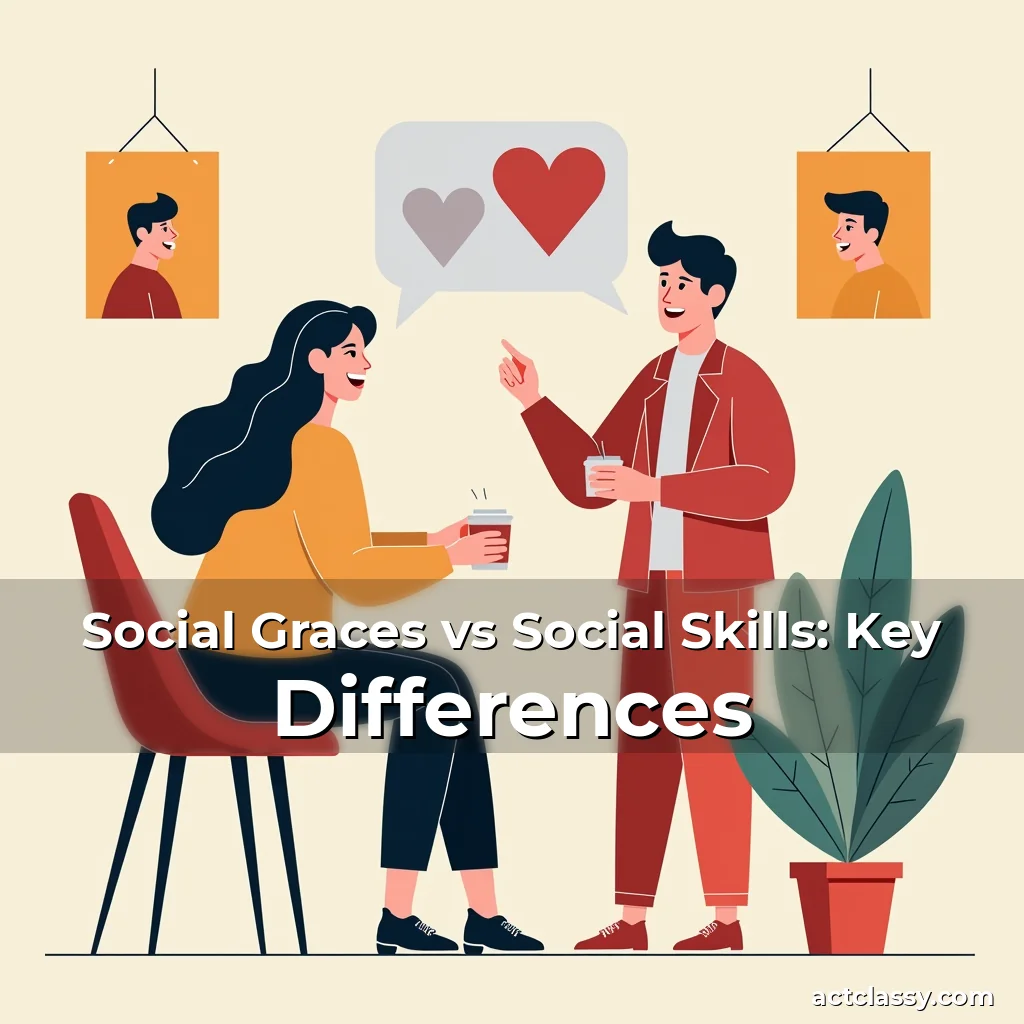
Social Graces vs Social Skills: The Unseen Power Behind Successful Interactions
The difference between mere competence and magnetic presence lies in mastering both social graces and social skills. While many conflate the two, understanding their distinction opens doors to authentic connection.
This exploration dives beneath surface-level etiquette to reveal how cultivated grace enhances every interaction, from business meetings to family dinners.
Decoding the Fundamental Difference
Social graces refers to the refined mannerisms and thoughtful behaviors that demonstrate respect and consideration during social exchanges. These are the intangible qualities that make someone feel comfortable and valued.
In contrast, social skills encompass the measurable competencies required to navigate social situations successfully – including communication techniques, conflict resolution abilities, and emotional intelligence.
Consider them as complementary forces: technical proficiency paired with heartfelt intentionality. Like a well-tuned instrument playing beautiful music, both elements working harmoniously create exceptional social dynamics.
The Origins of Graceful Conduct
Historical records show that social graces evolved through centuries of human civilization as societies developed norms for respectful behavior. Ancient Roman banquets had strict protocols for seating arrangements and table manners.
During the Victorian era, elaborate etiquette manuals emerged detailing acceptable behavior for aristocrats navigating court life. These traditions laid the foundation for modern-day standards of decorum.
Interestingly, anthropological studies indicate that primitive tribes also practiced forms of social graces long before written record keeping began. This suggests an innate human desire to engage harmoniously with others.
Cultivating Emotional Intelligence
A crucial component of both social skills and social graces involves developing emotional intelligence – the ability to perceive, understand, and manage emotions in oneself and others. This skillset enables nuanced social navigation.
Empathy becomes particularly vital when practicing social graces. Recognizing unspoken feelings allows individuals to respond thoughtfully rather than merely mechanically following etiquette guidelines.
Self-awareness plays a parallel role in refining social skills. Understanding one’s own emotional triggers helps prevent misunderstandings and fosters genuine connections.
Modern Applications of Traditional Etiquette
Studies show that people who master traditional etiquette principles perform better in professional settings. Research conducted by Harvard Business Review found that executives exhibiting strong social graces were perceived as more trustworthy by colleagues.
However, contemporary interpretations require balancing tradition with authenticity. One survey revealed that younger generations value sincerity over rigid adherence to outdated customs.
Tech-savvy professionals now apply social graces in digital spaces – maintaining courtesy in emails, practicing patience in virtual meetings, and respecting boundaries online.
Navigating Differentiated Social Environments
Understanding social graces requires recognizing the nuances between various environments. Formal events demand heightened awareness of established traditions while informal gatherings call for relaxed spontaneity.
Business networking scenarios necessitate strategic application of both skill sets. Demonstrating attentiveness shows respect while effective communication facilitates meaningful professional relationships.
Family dynamics present unique challenges where generational expectations often collide. Adapting social graces across age groups prevents awkward silences and maintains familial harmony.
Cultural Sensitivity in Global Contexts
Worldwide travel has increased the importance of cross-cultural social grace. A simple gesture that signifies friendship in one culture may be interpreted as disrespect elsewhere.
Paying homage to local customs demonstrates both social grace and global awareness. This includes understanding dress codes, dining etiquette, and conversational taboos.
Language barriers necessitate enhanced nonverbal communication skills. Mastering subtle cues like eye contact, body language, and facial expressions becomes essential.
Mental Health Benefits of Refined Manners
Psychologists emphasize the mental health advantages of cultivating good social habits. Improved self-esteem results from feeling confident in social situations, leading to decreased anxiety levels.
Socially graceful individuals report greater life satisfaction due to enriched interpersonal relationships. Regular positive interactions contribute to overall psychological wellness.
Therapeutic applications increasingly incorporate etiquette training for patients dealing with social anxiety disorders. Structured practice environments help build confidence gradually.
Building Confidence Through Consistent Practice
Routine engagement in social activities strengthens both skill and grace development. Attending community events provides safe spaces for gradual exposure to varied social settings.
Voice modulation exercises enhance clarity and warmth in conversations. Practicing active listening improves comprehension and response quality.
Gestural awareness – being conscious of hand movements, posture, and physical proximity – significantly impacts others’ perceptions.
Technology’s Impact on Modern Etiquette
The digital revolution has transformed traditional notions of appropriateness. Text messaging conventions differ vastly from face-to-face interactions requiring tailored approaches to politeness.
Social media platforms introduce new dimensions to public persona management. Maintaining consistent character across all communication channels presents unique challenges.
Virtual meetings require adapting physical cues to screen-based interactions. Camera angles, background noise control, and visual presentation become part of digital social grace.
Bridging Generational Communication Gaps
Intergenerational dialogues benefit immensely from practiced social skills. Patience, openness, and curiosity foster mutual understanding despite differing worldviews.
Parents teaching children traditional courtesies lay a solid foundation for future social development. However, flexibility remains necessary to accommodate evolving cultural norms.
Young adults mentored in social refinement gain competitive advantage in professional spheres. Employers value candidates demonstrating balanced social capability.
Enhancing Professional Relationships Through Grace
Business environments thrive on mutual respect facilitated by shared understanding of appropriate conduct. Simple gestures like offering assistance or acknowledging achievements strengthen collegial bonds.
Client relations improve markedly when service providers exhibit sincere interest beyond transactional obligations. Thoughtful gestures elevate customer experiences substantially.
Leadership effectiveness correlates strongly with demonstrated social aptitude. Inspiring team cohesion relies heavily on displayed empathy and fairness.
Managing Workplace Dynamics Effectively
Conflict resolution skills combined with tactful diplomacy enable smooth workplace functioning. Proactive identification of potential tensions prevents escalation scenarios.
Careful selection of vocabulary reduces misunderstanding risks, especially in multicultural teams. Awareness of power dynamics avoids unintentional offense.
Fostering inclusive environments demands ongoing sensitivity training programs addressing unconscious biases affecting daily operations.
Celebratory Occasions and Social Rituals
Participating in social rituals like weddings, funerals, or festivals enriches communal bonds. Observing customary practices respectfully honors collective heritage.
Learning event-specific protocols enhances enjoyment instead of creating stressors. Knowledge of gift-giving traditions simplifies celebratory participation.
Wedding ceremonies, for example, have intricate layers of etiquette from guest conduct to dress code requirements that signify reverence toward the occasion.
Spiritual and Cultural Celebrations
Religious holidays provide opportunities to observe special social customs passed down through generations. Showing respect through attire choices reflects appreciation for sacred occasions.
Community festivals offer insight into regional customs through food sharing, dance performances, and traditional games played according to ancestral rules.
Attending interfaith services educates participants about diverse beliefs shaping unique approaches to hospitality and communal gathering.
The Role of Education in Developing Etiquette
Formal education systems increasingly integrate social skills development alongside academic subjects. Character education curricula address moral development through experiential learning methods.
Private institutions often provide dedicated courses covering fine arts, public speaking, and other disciplines enhancing holistic development.
Extracurricular activities like debate clubs and theater productions naturally cultivate poise and articulation through regular performance opportunities.
Lifelong Learning Opportunities
Adult education centers continue providing opportunities for polite conversation mastery through workshops and seminars focused specifically on refinement strategies.
Online resources expand accessibility to etiquette instruction with interactive modules addressing contemporary concerns related to technology integration.
Professional certification programs validate acquired expertise serving as credentials for roles requiring polished interpersonal capabilities.
Measuring Progress in Social Development
Personal growth indicators exist beyond standardized testing measures. Self-assessment tools allow tracking improvements in areas like active listening and appropriate reciprocity.
Feedback mechanisms through peer reviews or mentorship programs provide objective assessments helping identify gaps needing improvement efforts.
Progressive milestones mark successful adaptation to increasing complexity levels seen in various social contexts encountered throughout life journeys.
The Journey Toward Mastery
Patience proves essential since social refinement unfolds progressively over time. Consistency of effort yields cumulative benefits evident through improved relational quality metrics.
Recording personal observations enables identifying patterns useful for targeted enhancement initiatives aimed at strengthening weaker aspects systematically.
Embracing continuous improvement philosophy transforms social skill development into lifelong pursuit rather than temporary endeavor focusing solely on immediate gains.
Creating Lasting Impacts Through Proper Behavior
Refined social conduct leaves enduring impressions influencing future relationship possibilities across various domains of existence. Courteous behavior establishes trusting foundations upon which lasting partnerships develop.
Civilized interactions reduce friction enabling smoother collaboration efforts regardless of geographical distances separating interacting parties.
Global connectivity demands elevated standards of conduct to maintain peaceful coexistence amidst growing international interdependence characterized by frequent cross-border engagements.
Conclusion
Mastering the balance between social skills and social graces unlocks profound rewards extending far beyond superficial appearances. It empowers individuals to connect meaningfully across diverse contexts.
By nurturing these complementary strengths, one cultivates an invaluable asset in today’s interconnected world – the rare combination of technical competency and heartfelt humanity.


As someone who has always found himself involved with online media in one form or another in my career, I have developed a passion for educating myself on the latest developments in publishing and social media and try to bring my love of the medium into my numerous projects.
You May Also Like


Event Planning Risk Management
The Art of Visionary Conceptualization A well-planned event begins long before booking venues or selecting vendors—it starts with cultivating a...
Confident Body Language for Public Speaking
Mastering Confident Body Language for Social Success In today’s world, communication extends far beyond spoken words. Your body tells stories...

Cocktail Party Thank You Note Guidelines
The Art of Cocktail Party Etiquette: Navigating Social Sophistication with Grace In today's fast-paced world, cocktail parties remain an enduring...
Networking Skills for Introverted Professionals
Preparing Thoughtfully for Networking Events Preparation transforms anxiety into confidence. Before attending an event, research attendees, speakers, and topics. Knowing...
Related Posts

Dress Code for Corporate Office Settings

Dining Etiquette: When to Start Eating

