


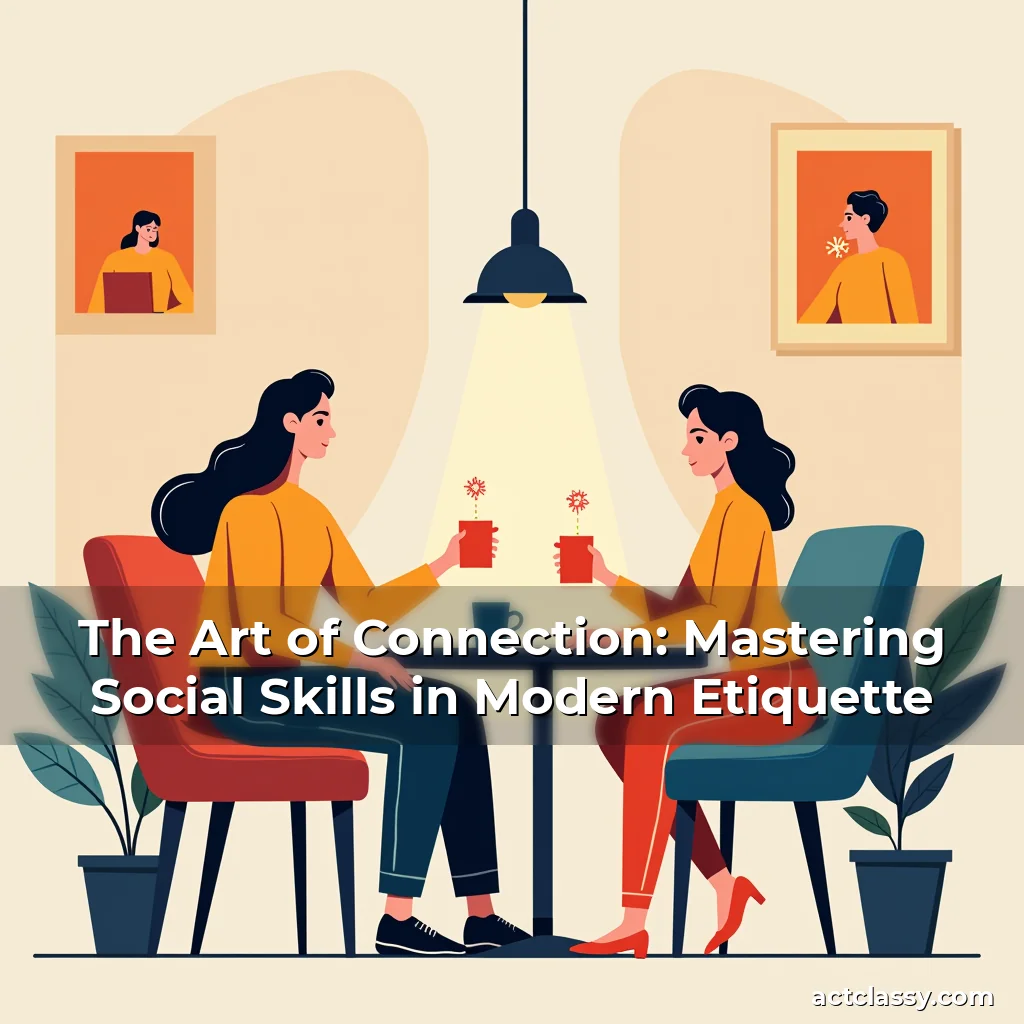
The Art of Connection: Mastering Social Skills in Modern Etiquette
In an era where digital interactions often overshadow face-to-face communication, mastering social skills has never been more crucial. The ability to connect meaningfully with others is at the heart of both personal fulfillment and professional success.
Whether you’re navigating a dinner party, attending networking events, or simply trying to build stronger relationships, understanding modern social dynamics can transform your interactions from routine exchanges to meaningful connections.
The Foundations of Effective Communication
At the core of every successful interaction lies effective communication. This goes beyond mere conversation; it involves active listening, thoughtful expression, and emotional intelligence.
Active listening requires full attention to the speaker, which means avoiding distractions such as checking your phone or preparing your response while someone else speaks. It also entails giving verbal cues that show engagement, like nodding or saying “I see.”
Thoughtful expression involves choosing your words carefully to ensure clarity and respect. This includes being mindful of tone, volume, and non-verbal signals that accompany your speech.
Emotional intelligence plays a vital role in interpreting and responding appropriately to others’ emotions during conversations. Recognizing when someone is feeling anxious or excited allows for more empathetic responses.
- Practice mindfulness: Being present in the moment helps you notice subtle cues in body language and vocal tones that indicate how others are feeling.
- Cultivate empathy: Try to understand situations from another person’s perspective before reacting, which fosters deeper connection and reduces misunderstandings.
Navigating Social Settings Confidently
Confidence in various social settings stems from preparation and self-awareness. Knowing what to expect in different environments enables smoother transitions between formal and informal gatherings.
For instance, understanding dress codes, appropriate topics of discussion, and expected behavior at events significantly enhances comfort levels among attendees.
Self-awareness involves recognizing your own strengths and limitations within group settings. Identifying moments when you might feel overwhelmed allows proactive steps towards managing those feelings effectively.
Understanding Different Types of Social Gatherings
Dinner parties typically require conversational finesse and awareness of table manners. Networking events demand strategic dialogue aimed at building professional contacts without appearing overly sales-oriented.
Social clubs may have their own set of unspoken rules regarding participation and contribution to discussions. Being observant helps adapt quickly to these nuances.
According to recent studies, individuals who demonstrate flexibility across diverse social scenarios report higher satisfaction levels in interpersonal relationships.
This adaptability contributes positively to mental well-being by reducing stress associated with unfamiliar social contexts.
Building Authentic Relationships Through Social Interactions
Authenticity forms the bedrock of lasting relationships. People naturally gravitate toward those who exhibit genuine interest in them rather than superficial charm alone.
Showcasing true curiosity about others—asking open-ended questions and genuinely remembering small details—creates opportunities for deepening bonds over time.
Maintaining authenticity doesn’t mean revealing everything instantly but gradually sharing aspects of oneself that align comfortably with shared interests or values.
Honesty remains key even amidst challenges; addressing issues respectfully instead of avoiding them builds trust that sustains long-term friendships and partnerships.
Mastering Nonverbal Cues in Everyday Encounters
Nonverbal communication accounts for approximately seventy percent of our daily messages according to research findings. Therefore, controlling these elements greatly influences perception during any encounter.
Bodily posture conveys confidence or shyness depending on whether shoulders are squared forward versus hunched inward. Eye contact establishes rapport yet must be balanced against cultural norms regarding gaze duration.
Gestures made with openness—such as uncrossed arms or palms facing up—invite further dialogue compared to closed-off positions like crossed legs or folded hands.
Vocal inflection adds nuance to spoken words; varying pitch and pace keeps conversations dynamic while showing enthusiasm about subjects discussed.
Cultural Sensitivity in Global Social Contexts
In today’s interconnected world, encountering people from varied backgrounds becomes increasingly common. Demonstrating cultural sensitivity prevents missteps that could damage newly formed relationships.
Research indicates that ninety-two percent of professionals believe cross-cultural competence improves workplace collaboration and client relations globally.
Familiarizing yourself with basic customs—from greetings to dining practices—in different cultures equips you better when interacting internationally.
Being respectful of religious beliefs and traditions shows consideration for others’ values, reinforcing mutual respect regardless of geographical differences.
Handling Difficult Conversations Gracefully
Difficult conversations arise inevitably whenever differing opinions exist. Approaching these discussions constructively maintains dignity for all involved parties.
Using “I” statements focuses attention on personal experiences rather than blaming others. For example, stating “I felt surprised when…” avoids accusatory phrasing altogether.
Remaining calm under pressure ensures clear thinking so solutions emerge logically rather than emotionally charged reactions taking precedence.
If tensions escalate despite best efforts, agreeing upon a temporary pause provides space for reflection before resuming discussion productively later.
Leveraging Technology Wisely Within Social Frameworks
While technology facilitates connectivity, its misuse can hinder authentic human connection. Balancing screen time with real-world engagement preserves quality face-to-face interactions.
Sending text messages should complement—not replace—direct conversations especially concerning sensitive matters requiring nuanced expressions through voice intonations.
Participating actively in online communities still counts as social activity provided it involves genuine contributions rather than passive scrolling behaviors.
Setting boundaries around device usage during meals or meetings respects others’ need for undivided attention, enhancing overall experience for everyone present physically.
Continuous Improvement Through Feedback & Reflection
Personal growth in social abilities demands ongoing evaluation of past encounters. Reflecting honestly after each significant interaction identifies areas needing improvement.
Seeking constructive feedback from trusted friends or mentors offers objective viewpoints highlighting blind spots otherwise unnoticed personally.
Keeping track of progress via journal entries or goal-setting apps motivates sustained development along chosen paths of enhancement.
Regular practice reinforces learned techniques until they become second nature, making confident interactions effortless over time.
Conclusion
Developing strong social skills enriches life exponentially by opening doors previously inaccessible due solely to lack thereof.
To begin cultivating improved interpersonal capabilities today, start small by focusing deliberately on one aspect mentioned above consistently until mastery occurs organically through repetition.


Related Posts


Social Skills in Conflict Resolution

Advanced Social Skills for Executives
