


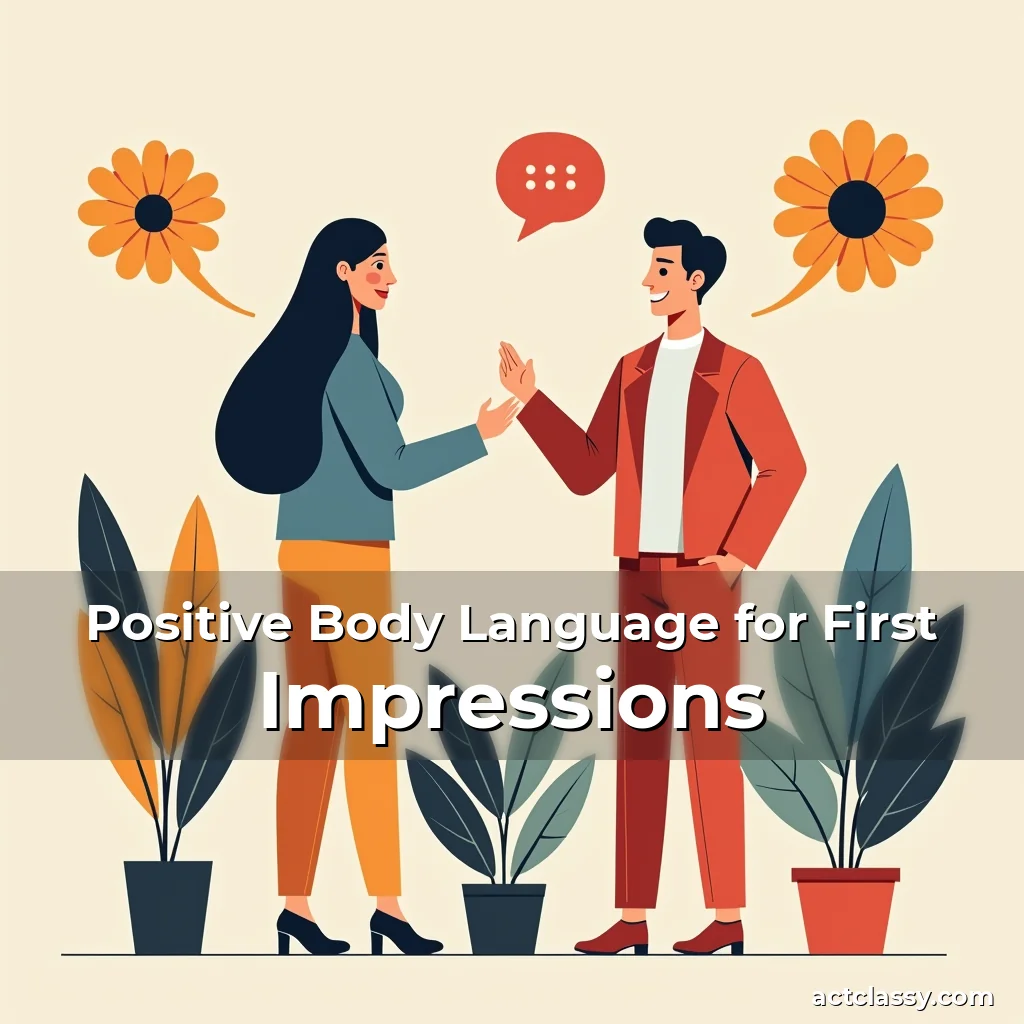
The Art of Positive Body Language in Everyday Interactions
In our highly social world, mastering positive body language can be as crucial as perfecting your spoken communication skills. The way we carry ourselves, from subtle eye movements to posture shifts, sends powerful nonverbal messages that shape others’ perceptions of us.
Understanding these cues allows us to build stronger connections, project confidence without arrogance, and navigate social situations with grace. For those who value both personal development and professional success, refining your body language is an essential skill set worth cultivating.
Decoding Nonverbal Communication
Nonverbal communication constitutes up to 93% of human interaction according to Albert Mehrabian’s famous research model. This includes not only body language but also vocal tone and facial expressions. Recognizing how these elements work together helps create meaningful interpersonal connections.
Body language acts as the subconscious mirror of our internal state. When we’re nervous, our shoulders may hunch; when confident, we stand tall with open stances. These physical manifestations often reveal truths our words might conceal.
Mastering nonverbal signals enhances emotional intelligence. By understanding the unspoken messages people convey through their postures, gestures, and micro-expressions, we gain deeper insight into others’ feelings and intentions.
- Eye contact: Maintaining appropriate gaze during conversations shows respect and interest while excessive staring can come off as intimidating
- Facial expressions: Smiling genuinely communicates warmth and approachability, making interactions feel more inviting
- Gestures: Open hand movements signal openness, whereas crossed arms may imply defensiveness or resistance
Cultivating Confident Posture
A strong posture isn’t merely about standing straight; it’s about projecting self-assurance through controlled body alignment. Proper spinal positioning and relaxed yet alert stance contribute significantly to perceived competence and credibility.
The military has long understood the power of posture in instilling discipline and presence. Adopting similar techniques in daily life – such as keeping feet shoulder-width apart and chin slightly lifted – creates a commanding yet approachable appearance.
Tension-free muscle engagement plays a critical role in maintaining good posture. Rather than rigidly forcing upright position, focus on activating core muscles naturally through mindful awareness of your body mechanics.
Mirrors serve as excellent training tools for developing better posture habits. Regular practice before mirrors at home or in dressing rooms helps reinforce correct alignment patterns over time.
Combining posture refinement with regular exercise routines strengthens the musculature supporting proper alignment, creating lasting improvements rather than temporary fixes.
Powerful Eye Contact Techniques
Strategic use of eye contact transforms ordinary conversations into compelling exchanges. However, finding the right balance between connection and discomfort requires careful consideration of cultural norms and individual comfort levels.
Research indicates optimal eye contact lasts approximately three seconds before looking away. This natural rhythm mimics conversational cadence while avoiding the intensity associated with direct prolonged gazing which can feel intrusive.
Varying eye contact duration based on conversation dynamics enhances authenticity. During intense discussions requiring active listening, increasing visual engagement signals full attention and empathy toward speaking partners.
Complementing eye contact with peripheral vision scanning ensures you remain aware of other environmental factors without appearing distracted from current dialogue.
People with chronic poor eye contact habits may benefit from gradual exposure exercises starting with brief glances during low-stakes interactions until they become more comfortable with extended eye engagement.
Benevolent Facial Expressions
Facial expressions form the foundation of immediate impressions, influencing whether someone perceives you as friendly, trustworthy, or aloof. A warm smile alone can transform an awkward encounter into a pleasant experience.
Distinguishing between genuine smiles and forced ones matters greatly. Authentic laughter involves the entire face including crinkles around eyes, whereas fake grins typically originate solely from mouth movement without eye involvement.
Habitual frowning or pursed lips communicate negativity even when verbal responses appear neutral. Conscious effort to maintain open mouth positions and raised eyebrows fosters more approachable appearances.
Learning to read others’ facial expressions equips individuals with valuable emotional intelligence skills. Noticing subtle changes in another person’s expression enables timely adjustments in your own demeanor accordingly.
Routine practice using mirrors can help identify habitual facial expressions. Paying close attention to spontaneous reactions reveals underlying personality traits that could be refined through conscious control.
Hand Gestures That Communicate Positively
Open-handed gestures promote inclusivity by signaling receptiveness to ideas and perspectives. In contrast, clenched fists or palms facing inward suggest defensiveness or aggression regardless of intent.
Appropriate gesture size relates to conversational context. Larger movements tend to emphasize points during presentations, while smaller motions suit casual chats where subtlety maintains intimacy rather than distance.
Synchronizing hand movements with speech patterns enhances message clarity. Studies show speakers who match verbal pauses with corresponding gestural stops are perceived as more credible communicators.
Variety in gestural repertoire prevents monotony in interactions. Alternating between pointing fingers for emphasis and palm-up gestures indicating openness keeps nonverbal vocabulary dynamic.
Awareness of space occupied by gestures ensures they don’t overwhelm listeners physically or psychologically. Keeping arm movements within personal boundaries respects others’ comfort zones.
Personal Space Awareness
Respecting others’ personal space boundaries builds trust and reduces anxiety in social encounters. Different cultures define acceptable proximity distances differently, making adaptability key in cross-cultural settings.
Physical distance ranges generally fall between 18 inches (intimate) to several yards (public). Identifying situational appropriateness prevents unintentional invasions of personal territory.
Observe others’ body language for signs they need more space. Subtle indicators include turning shoulders away, clearing throat, or adjusting clothing items when feeling uncomfortable due to closeness.
Purposefully leaving extra room in crowded environments demonstrates considerate behavior. People often appreciate the thoughtful effort to avoid accidental encroachments in tight spaces.
Cultural sensitivity regarding proxemics becomes increasingly vital in global business contexts where misinterpretation risks damaging professional relationships unnecessarily.
Managing Micro-Expressions
Micro-expressions flash across faces in less than half a second, revealing true emotions that may differ from what someone verbally expresses. Becoming adept at recognizing them provides profound advantages in interpersonal navigation.
Common micro-expressions include eyebrow raises signaling surprise, lip biting showing uncertainty, or quick nose flaring hinting at anger before being masked by composed facade. Learning to interpret these fleeting displays sharpens observational acuity.
Developing this skill takes deliberate practice focusing on facial regions most expressive: forehead, cheeks, and lower face. Concentrating on minute changes makes detecting authentic emotions easier over time.
Mental preparedness before entering potentially stressful situations increases chances of catching subtle tells from others. Anticipating potential emotional triggers primes observers to notice micro-expressions more readily.
While mastery doesn’t require reading minds, heightened awareness of transient expressions definitely contributes to richer social comprehension capabilities.
Conversational Body Alignment
Proper directional orientation during dialogues affects perception dramatically. Facing someone fully signifies active engagement, whereas partial turns might indicate disinterest or preoccupation elsewhere.
Head tilts enhance empathetic listening behaviors by conveying attentiveness and curiosity. This slight repositioning encourages continued conversation flow and mutual participation.
Leg placement offers telling clues about relationship status with conversation partner. Crossed legs facing towards person implies attraction; turned away suggests reservations or discomfort.
Seated posture choices reflect mental states too. Leaning forward demonstrates eagerness, while reclined positions suggest passivity unless reinforced by specific verbal commitments.
Coordinating upper body and leg movements harmonizes overall messaging coherence. Consistent alignment between head direction, torso angle, and limb positioning reinforces truthful communication.
The Power of Mirroring in Relationships
Mirroring techniques replicate others’ body language subconsciously to foster rapport and connection. This automatic mimicry generates instant sense of familiarity without overt intentionality.
Successful mirroring matches specific postural elements – head angles, sitting positions, or even finger tapping rhythms – creating unconscious synchronization that promotes bonding experiences.
Exercises involving recorded video sessions allow precise calibration of mirroring effectiveness. Reviewing footage identifies areas needing improvement in aligning physiological cues accurately.
Discernment remains important; mirroring shouldn’t become copying. Selective adoption of compatible aspects maintains individuality while still enhancing relational chemistry.
Gradual implementation of mirroring strategies works best initially. Starting with minor movements then progressing to more complex synchronizations avoids appearing overly rehearsed or mechanical.
Conclusion
Refining body language skills elevates every aspect of social engagement from casual meetups to high-stakes negotiations. Mastering these subtle cues empowers individuals to navigate diverse interactions confidently and competently.
Consistent practice and mindfulness transform these lessons into instinctive behaviors. As you continue honing your nonverbal communication abilities, remember that small improvements consistently lead to significant transformations in how others perceive and connect with you.


Related Posts


Asociality
